INTRODUCTION
On the morning of 06/05/1993, the smooth, resonant voice that defined country music fell abruptly silent. At 08:00 AM ET, legendary crooner Harold Lloyd Jenkins, known globally as Conway Twitty, collapsed on his tour bus in Branson, Missouri, succumbing to an abdominal aortic aneurysm. He left behind a staggering catalog of fifty-five number-one hits and a sprawling nine-acre entertainment complex in Hendersonville, Tennessee, affectionately known as Twitty City. Yet, before the shock of his sudden passing could fully settle over his millions of grieving fans, a quiet tension within the inner circle erupted into public view. The multi-million dollar empire, painstakingly built over four decades of relentless touring and masterful songwriting, became the center of an immediate tug-of-war. What began as a time of shared grief quickly transformed into a complex legal confrontation, setting the stage for a dramatic clash over his vast financial estate.
THE DETAILED STORY
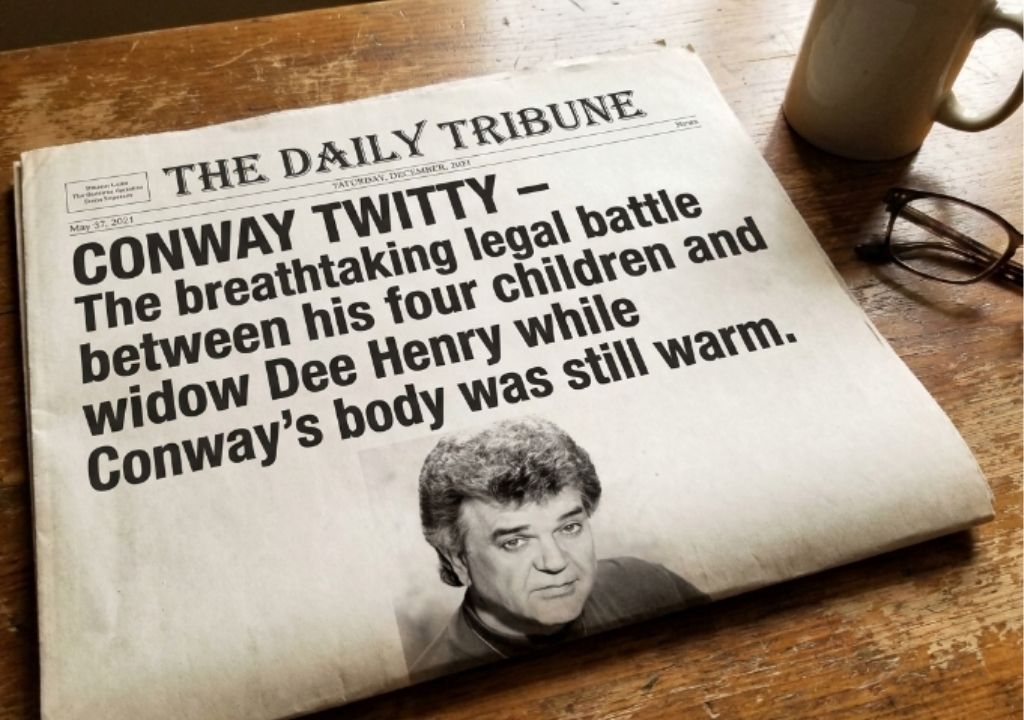
At the heart of the corporate and emotional crossfire stood two deeply entrenched factions: the icon’s four adult children—Michael, Joni, Kathy, and Jimmy—and his third wife, Delores “Dee” Henry, whom he had married in 1987. When the singer’s last will and testament was analyzed, it revealed that the music titan had intended for his biological children to inherit the entirety of his vast estate. However, the legal landscape of Tennessee introduced a volatile complication that bypassed testamentary intent. Under state statutes, a surviving spouse retains the right to claim an elective share of one-third of the total estate, effectively overriding the provisions of a pre-existing will. Dee Henry promptly exercised this right, sparking an immediate legal counter-offensive from the four siblings who sought to protect their father’s direct artistic legacy.
The legal battle rapidly escalated in court, paralyzing the administration of the estate and bringing operations at the lucrative Twitty City tourist attraction to a sudden standstill. The children argued that their father’s true intent was always to preserve his life’s work for his bloodline, while legal representation for the widow maintained that statutory marital rights were absolute. As legal fees accumulated and the IRS loomed with substantial estate tax demands, the pressure forced a monumental concession. The family was compelled to liquidate the very crown jewel of the singer’s physical empire to resolve the mounting debts and conflicting claims.
In a highly publicized transaction, the historic Twitty City property was sold for $7,000,000 USD to the Trinity Broadcasting Network. This forced liquidation marked the end of an era for country music tourism and underscored the high cost of testamentary ambiguity. While a confidential settlement eventually distributed the remaining assets and music royalties among the heirs, the courtroom battle permanently reshaped the family dynamic. The high-stakes drama surrounding the Conway Twitty Estate serves as a stark reminder of how quickly a lifetime of harmony can dissolve into legal discord.