INTRODUCTION
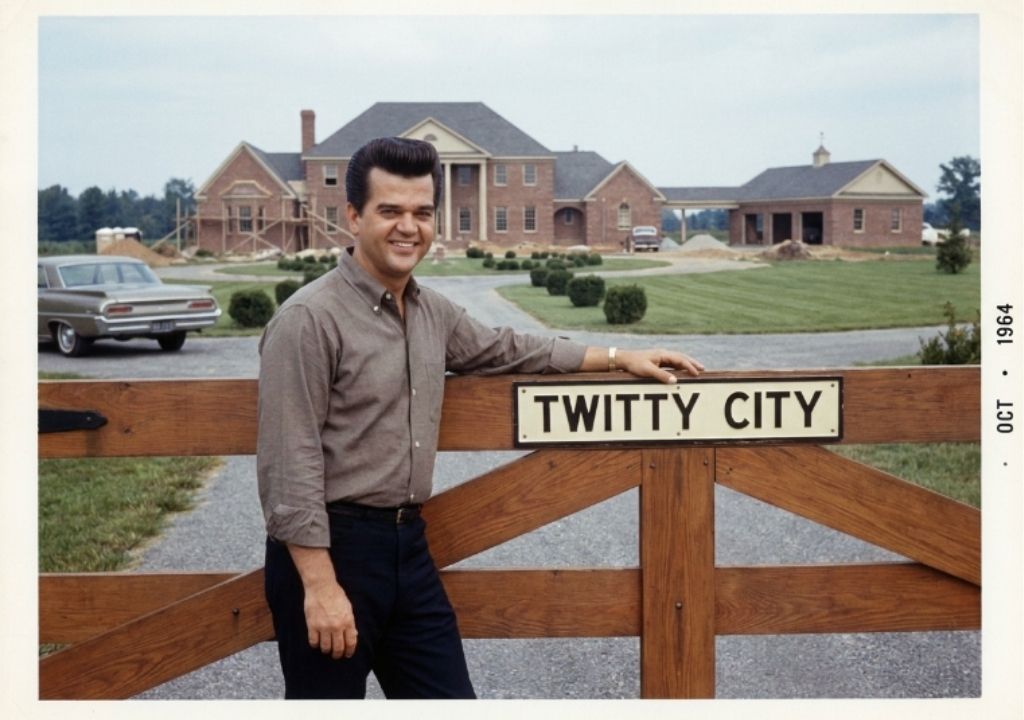
In 1964, Harold Lloyd Jenkins was preparing to shed his rockabilly skin to recreate himself as a country music deity under the name Conway Twitty. While some archival rumors mistakenly place his final wife, Delores “Dee” Henry, and the multi-million-dollar theme park known as Twitty City into this mid-sixties landscape, the true timeline of this country empire unfolded much later. In 1964, Twitty was still navigating his second marriage to Temple Medley and fighting to establish the sonic reputation that would eventually fund his grandest real estate ambition. The actual multi-million-dollar corporate clash over his estate did not emerge until after his sudden death on 06/05/1993, revealing how a legacy can be completely rewritten by the passage of time.
THE DETAILED STORY
The foundation of the Conway Twitty empire was built on meticulous artistic reinvention, but its financial zenith manifested decades after his initial 1960s country crossover. In 1982, the legendary vocalist opened Twitty City, a sprawling $15 million tourist complex in Hendersonville, Tennessee, that served as both a family compound and a commercial monument to his 40 Billboard number-one hits. When Twitty married his third wife, Delores “Dee” Henry, in 1987, she quickly transitioned from a personal partner to a central corporate player, even earning production credits on his late-career albums. Yet, beneath the veneer of country music royalty, a catastrophic legal oversight was quietly developing within the multi-million-dollar enterprise.
The underlying tension erupted into a full-scale institutional crisis immediately following Twitty’s untimely passing on 06/05/1993 from an abdominal aneurysm. Because the icon failed to update his primary will after his 1987 marriage, Tennessee probate codes automatically intervened, assigning unexpected one-third control to Henry over the entire multi-million-dollar estate. This legal reality directly collided with the vested interests of Twitty’s four adult children, who had long managed the daily operations and resided within the compound’s borders. The ensuing litigation over corporate salaries, residential rights, and intellectual property management transformed the beloved musical sanctuary into a toxic legal battleground.
As reported by major entertainment trade publications, the deadlock eventually forced the probate court to execute an absolute liquidation of the properties. The executive decision resulted in the eviction of the children and a massive public auction where decades of personal memorabilia were sold off to satisfy the fractured estate. The tragic dissolution of Twitty City stands as a stark warning in the music industry regarding asset management, demonstrating that even a historic catalog cannot survive the absence of clear corporate succession. Ultimately, the bitter dispute permanently altered the preservation of Twitty’s legacy, proving that the quietest legal omissions can dismantle the loudest musical empires.