INTRODUCTION
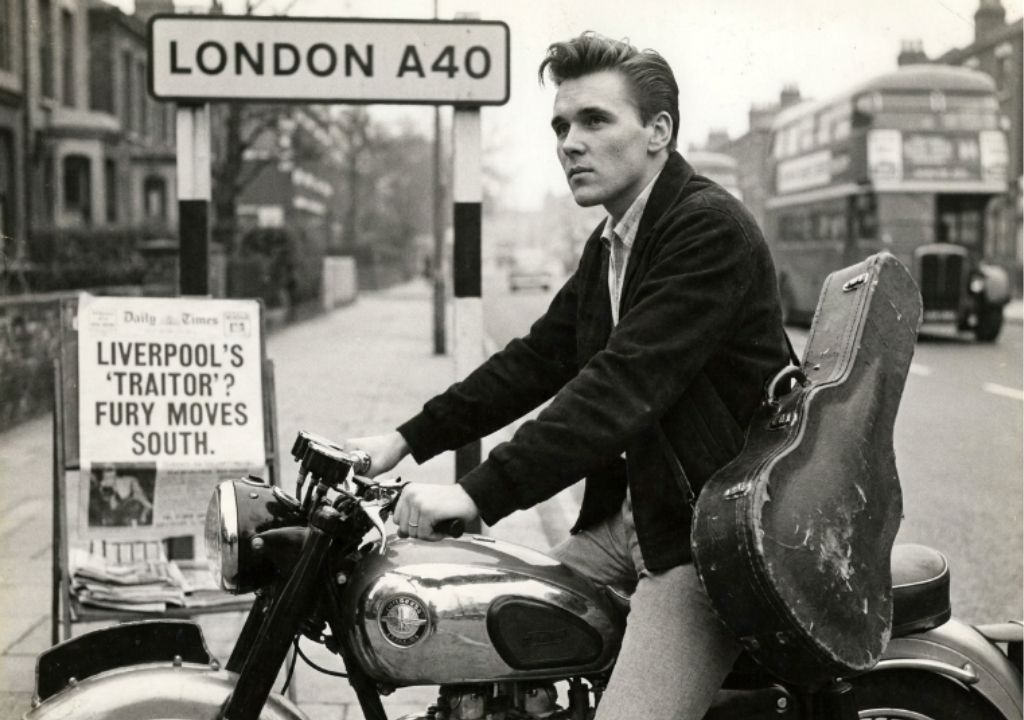
In October 1958, a young dockworker named Ronald Wycherley stepped onto the stage of the Essoldo Theatre in Birkenhead, holding nothing but a cheap guitar and a handful of raw, self-penned country-rock songs. Within hours, London impresario Larry Parnes transformed the shy teenager into a leather-clad sensation, rebranding him for the masses. Yet, as the newly minted icon packed his bags for the bright lights of the capital, a quiet resentment began to simmer along the River Mersey. To a fiercely proud, insular post-war community, leaving the working-class docks for the commercialized machinery of the south felt less like a triumph and more like an intentional desertion. This geographic relocation marked the beginning of a complex cultural friction, highlighting a deep-seated tension between regional authenticity and corporate centralization that would shadow the handsome rock-and-roller throughout his legendary career.
THE DETAILED STORY
The narrative of betrayal surrounding the departure of Billy Fury highlights the rigid sociological boundaries of mid-century Britain. In the late 1950s, Liverpool was an industrial port city undergoing economic hardship, yet it possessed a vibrant, fiercely guarded local identity. When local musicians began gaining traction, the community expected them to carry the flag of the northwest. Instead, the sudden intervention of London management disrupted this organic relationship. By placing the young star into a highly structured “stable of stars” alongside manufactured pop idols, the industry stripped away his raw dockworker persona, replacing it with a sanitized, cosmopolitan image tailored for national television.
This corporate repackaging caused immediate friction back home. Local purists and underground music commentators argued that moving to London’s West End was tantamount to turning one’s back on the community that shaped his initial sound. While contemporary peers like the Beatles later achieved global success while retaining their distinct Scouse identities, the early trajectory of this solo artist was seen as a total assimilation into the London establishment. He lived in elite neighborhoods, including Cavendish Avenue, effectively isolating himself from the daily realities of his working-class origin.
However, looking past the emotional accusations reveals a highly pragmatic reality. The institutional infrastructure of the post-war British entertainment industry was entirely concentrated in London; major recording studios like Decca, influential television networks, and national music press simply did not exist in the north. The legendary performer secured twenty-six top-twenty hits precisely because he operated directly within the financial epicenter of the global music business. Without this critical migration, his highly influential 1960 album The Sound of Fury might never have received national distribution or radio play. Ultimately, the harsh “traitor” label reflects the structural burden placed on early regional pioneers, who were forced to choose between staying loyal to an underfunded hometown or leaving it behind to build the commercial foundations of British rock and roll history.