INTRODUCTION
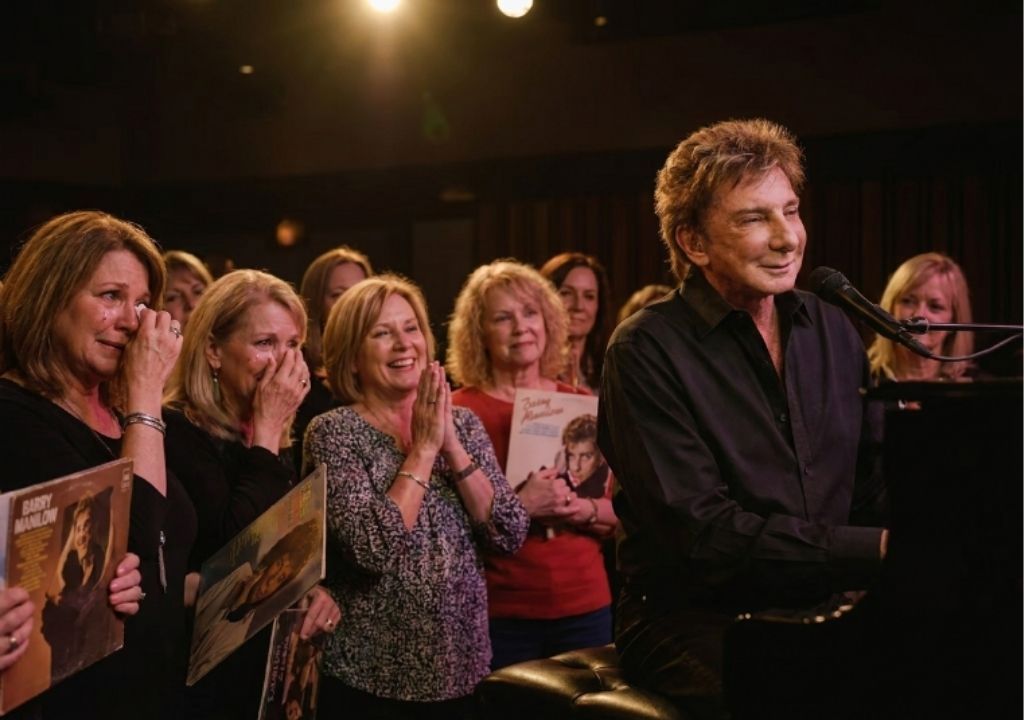
Step inside the International Theater at the Westgate Las Vegas Resort & Casino on any given weekend in 2026, and the atmosphere feels less like a standard concert and more like a collective emotional awakening. Thousands of women, predominantly in their middle ages, stand in unison, their faces illuminated by the glow of glow-sticks, singing along to every syllable of the 1974 classic “Mandy.” For five decades, this precise audience segment has formed the unyielding bedrock of a multi-million-dollar entertainment empire. While mainstream pop culture frequently prioritizes ironical detachment and youth-centric trends, this venue witnesses an unashamed display of pure, raw sentimentality. The phenomenon raises a profound sociological question: what is the precise psychological mechanism that transforms these soft-rock ballads into an absolute emotional sanctuary for this specific generation of listeners?
THE DETAILED STORY
To comprehend this enduring connection, one must look beyond the stagecraft to the underlying psychological architecture of midlife identity. For many women navigating the complex transitions of middle age—such as empty nest syndrome, career shifts, or evolving relationships—societal expectations often dictate a muted emotional existence. Mainstream media pushes an implicit mandate to remain cool, collected, and invisible. Enter the sonic world of the artist Billboard ranks as the top Adult Contemporary performer in history. His catalog operates as an emotional validation engine, deliberately built on unabashed sincerity and heart-on-sleeve vulnerability. Songs like “Could It Be Magic” and “Weekend in New England” provide a safe, structured space to experience deep longing, heartbreak, and romance without the risk of real-world judgment.
Psychologists identify this behavior as a manifestation of the “reminiscence bump,” a cognitive phenomenon where individuals retain a heightened emotional memory for music experienced during their formative teenage and young adult years. Listening to these tracks triggers an instantaneous neurological return to a period of intense self-discovery and boundless potential. Furthermore, the modern fandom has evolved into a powerful social anchor. Calling themselves “Friends of Barry,” these women have formed highly organized, global networks that extend far beyond simple record-buying. They travel collectively across time zones, celebrate major milestones together, and cultivate genuine real-life bonds rooted in their shared musical allegiance.
This collective experience effectively combats the social isolation that frequently characterizes midlife transitions. By creating a community where sentimentality is a badge of honor rather than a cultural cliché, the music provides a profound sense of belonging. The historic residency numbers at the International Theater prove that this unique psychological sanctuary generates immense economic power. It stands as an enduring emotional pact built on mutual respect and absolute authenticity, demonstrating clearly that unshielded pop sentimentality remains one of the most potent, transformative forces in modern music history.