Introduction
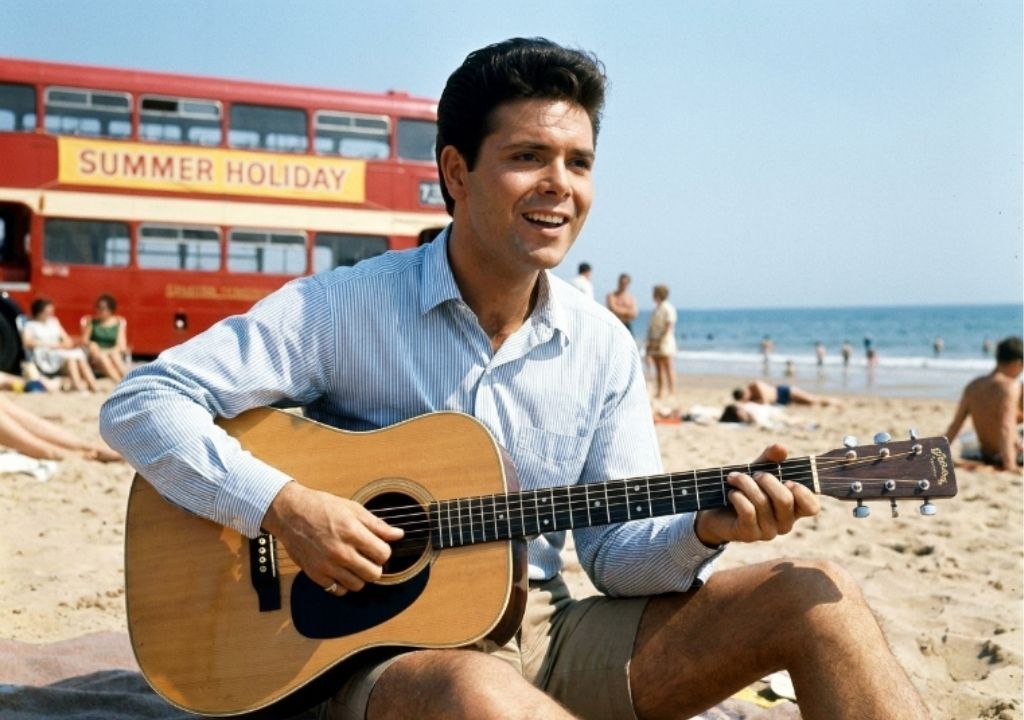
There is a distinct, golden-hued corner of our collective memory reserved for the early 1960s, a time when the world seemed to be transitioning from monochrome to vivid technicolor. If you close your eyes and let the mind wander back to the summer of 1963, you can almost feel the gentle breeze of an English seaside morning, hear the distant hum of a transistor radio, and see the iconic bright red double-decker bus charting a course toward European sunshine. At the absolute center of this sun-drenched cultural tapestry stands one man and one immortal melody: Sir Cliff Richard and his legendary anthem, “Summer Holiday.”
Released as the title track for the smash-hit musical film of the same name, “Summer Holiday” is far more than just a piece of vintage pop music; it is a sonic time capsule of pure, unadulterated optimism. In the early 60s, post-war austerity was finally giving way to a newfound sense of youthful freedom. Teenagers suddenly had their own money, their own style, and an insatiable desire to explore the world beyond their gray, rain-slicked hometown streets. Cliff Richard, with his boy-next-door charm, swoon-worthy smile, and effortlessly smooth vocal delivery, became the ultimate herald of this joyful new era. Along with his brilliant backing band, The Shadows, he crafted a soundtrack that felt like an open invitation to happiness.
The genius of the song lies in its exquisite, deceptive simplicity. Written by The Shadows’ own Bruce Welch and Brian Bennett, the track opens with an acoustic guitar strum that feels instantly welcoming, like an old friend pulling you onto the dance floor. The rhythm is a gentle, swinging trot, perfectly mimicking the steady, leisurely roll of a vehicle traveling down an open country road. When the brass section kicks in, it introduces a bright, celebratory warmth that lifts the spirit immediately. Cliff’s vocals enter with an easygoing, conversational grace. He isn’t straining for dramatic effect; instead, he sings with a genuine, infectious grin that you can literally hear through the speakers. He promises a week or two of doing things we’ve always wanted to, and in that moment, you believe him completely.
Culturally, “Summer Holiday” arrived at a fascinating crossroads in musical history. It hit the top of the UK charts just months before Beatlemania swept the globe and fundamentally changed the landscape of rock and roll. Yet, Cliff’s masterpiece held its ground, defining the peak of the traditional British pop era. It offered a wholesome, romanticized vision of adventure that resonated deeply with families and teenagers alike. The narrative of escaping the mundane routine, packing bags, and seeking out sunny shores with your closest companions is a universal human desire that never goes out of fashion.
Decades after its release, the song still retains its magical ability to evaporate clouds and bring out the sunshine. Listening to it today is a deeply nostalgic exercise, evoking a simpler time when joy didn’t require a digital screen or a social media filter. It reminds us of old photographs with faded edges, the taste of melting ice cream, and the beautiful innocence of youth. Cliff Richard didn’t just sing a song; he bottled the very essence of summertime peace and handed it down through the generations.