Introduction
The turn of the 1960s was an era defined by a unique kind of romanticism—a time when popular music was infused with a sense of pure, starry-eyed wonder and innocent longing. For anyone who lived through that golden age of vinyl or who has spent years diving into its rich archive, certain melodies carry the weight of an entire decade’s dreams. Billy Fury’s rendition of “A Thousand Stars” is precisely one of those magnificent treasures. Originally written by Eugene Pearson and popularized in the United States as a sweet teenage anthem, the song underwent an extraordinary shift in texture when it was embraced by the United Kingdom’s premier romantic crooner. Fury did not just sing the song; he enveloped it in his signature midnight atmosphere, turning a simple declaration of love into a sweeping, cinematic experience that resonates deeply with the soul.
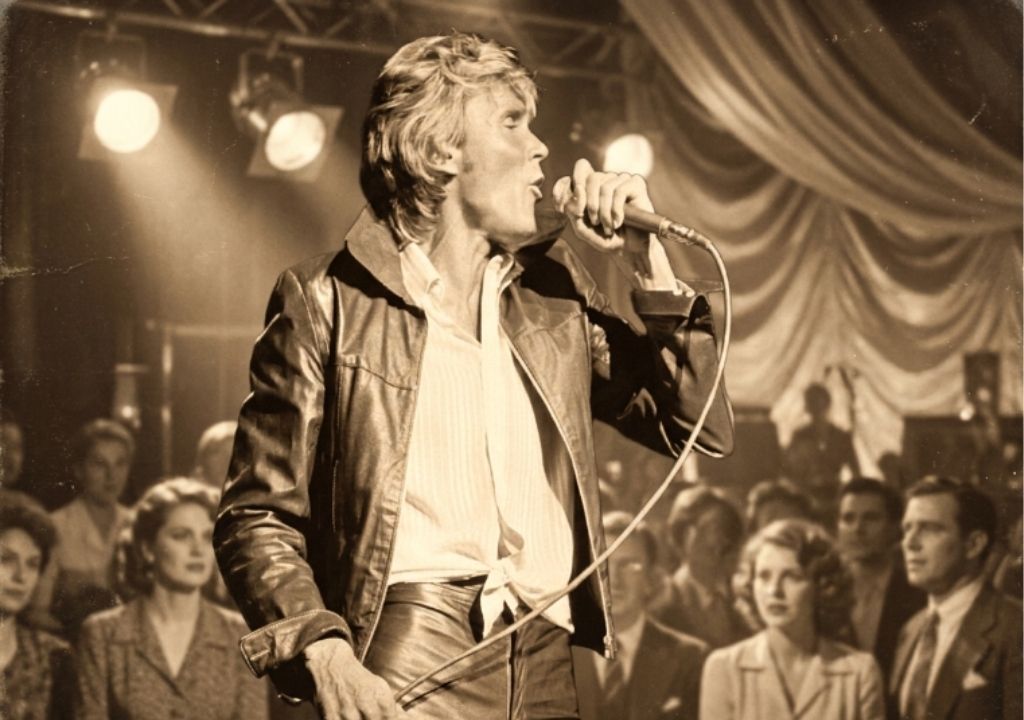
To truly understand the magic of this recording, one must look at the fascinating duality of Billy Fury himself. Born Ronald Wycherley in Liverpool, he possessed the rugged, jaw-dropping aesthetics of a leather-jacketed rock-and-roll rebel, frequently drawing comparisons to Elvis Presley and James Dean. Yet, underneath the fierce stage presence lay a deeply sensitive, vulnerable young man who suffered from severe health issues since his childhood. This juxtaposition gave his voice an unmistakable, haunting fragility that no other artist of his generation could replicate. When Fury sings “A Thousand Stars,” that underlying tenderness takes center stage. He delivers the opening lines with a breathless intimacy, as if he is whispering a profound secret directly into the listener’s ear. As his vocals climb alongside the rising melody, you can hear a genuine ache—a sincere, unmanufactured devotion that instantly elevates the track beyond a standard pop ballad.
The arrangement of Fury’s version perfectly highlights the sophisticated production standards of the early 1960s British music scene. Dominated by lush, echoing instrumentation and beautifully restrained rhythms, the track builds a sonic sanctuary that mirrors the infinite depth of a clear night sky. The backing instrumentation provides a smooth, hypnotic tapestry, allowing Fury’s smooth vocals to glide effortlessly above like a lone ship navigating a calm sea. The backing vocal arrangements add a distinctly nostalgic, dreamlike counter-melody, mimicking the gentle sigh of a summer breeze. Every musical element is perfectly calculated to draw the listener into a specific mood: one of quiet reflection, sweet yearning, and absolute romance.
Decades later, “A Thousand Stars” stands as a poignant reminder of a time when pop music possessed a theatrical yet thoroughly honest heart. Long before the chaotic energy of the British Invasion rewrote the rulebook of popular culture, this track celebrated the power of the gentle, vulnerable male balladeer. For the dedicated lover of old-school music, listening to Billy Fury perform this classic is akin to opening an old wooden chest filled with handwritten letters and faded photographs. It evokes an era when love was measured by the stars in the sky and the devotion in one’s eyes. It remains a flawless piece of musical history, capturing a timeless sentiment that continues to shine brightly through the decades.