Introduction
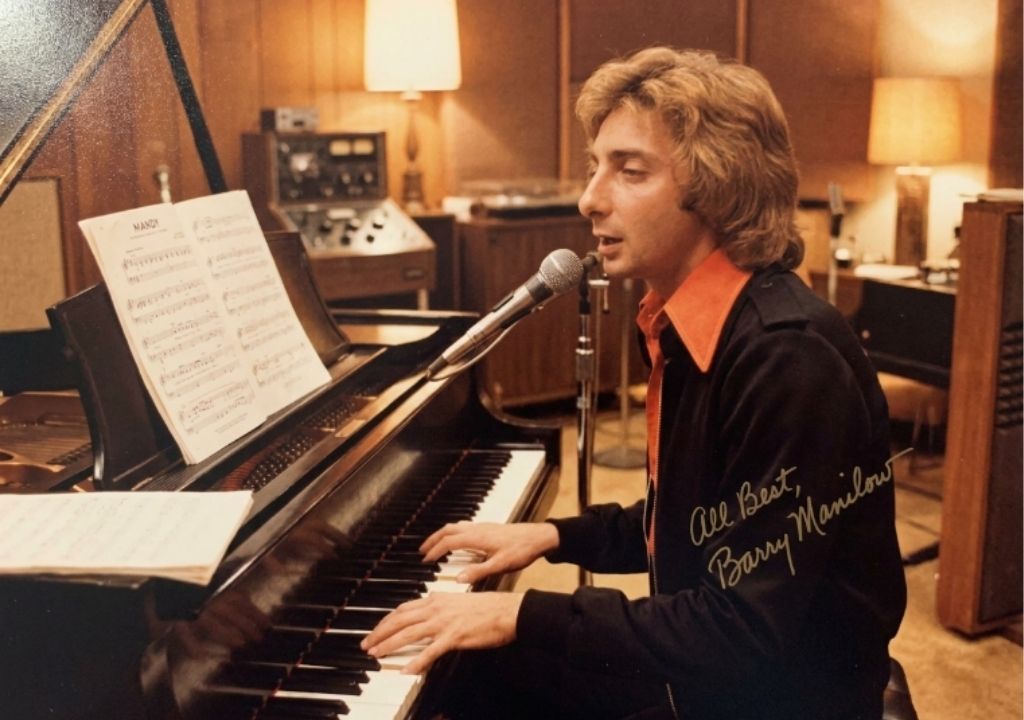
The year was 1974, an era defined by a shifting musical landscape where raw rock and glossy disco fought for dominance on the airwaves. Yet, amidst the sonic rumble of the decade, a softer, profoundly intimate wave of storytelling was sweeping through the hearts of listeners. It was during this golden age of the pop ballad that a young, classically trained musician stepped up to a piano and altered the course of his destiny. That man was Barry Manilow, and the song that would forever bind his name to the annals of musical history was a sweeping masterpiece of vulnerability simply titled “Mandy.”
When you listen to “Mandy,” you are not just listening to a melody; you are stepping into a cinematic vignette of regret and longing. The song opens with a delicate, solitary piano progression, mimicking the heavy, quiet steps of someone pacing a lonely room after midnight. Manilow’s vocals enter with a stark, unpolished honesty, capturing the breathy hesitation of a man confronting his own failures. The atmosphere is thick with nostalgia—the kind that smells like old rain on asphalt and tastes like bitter coffee in an empty kitchen. It establishes a mood so tangible that the listener instantly becomes a co-traveler on this journey of heartbreak.
What truly separates Barry Manilow’s interpretation from its original incarnation (originally recorded as “Brandy” by Scott English) is the dramatic, operatic architecture he brought to the arrangement. Manilow understood that true heartbreak is never flat; it builds, surges, and crashes like an emotional tidal wave. As the song progresses from the quiet introspection of the verses, the orchestration swells. The strings sweep in like a sudden rush of memories, and the drums ground the rhythm with the steady, aching pulse of a wounded heart. By the time the legendary key change arrives, Manilow is no longer just singing—he is soaring, baring his soul with a powerful, resonant belt that demands the listener feel every ounce of his sorrow.
During the mid-1970s, this grand, theatrical approach to pop music became Manilow’s signature hallmark. He possessed a unique gift for turning deeply personal confessions into universal anthems. “Mandy” became the blueprint for the modern power ballad, demonstrating how a song could combine sophisticated musical theory with raw, accessible emotion. It was a track that stood out because it dared to be completely unapologetic in its sentimentality. It reminded us that letting go of true love is a universal scar, a quiet ache that remains long after the romance has faded. Decades later, that piano intro still holds the incredible power to stop us in our tracks, forcing us to remember the ones who got away.