INTRODUCTION
In the golden twilight of Hendersonville, Tennessee, the sprawling 9-acre estate known as Twitty City stood as a physical testament to a father’s ultimate promise: keeping his four children close forever. Built in 1981, the multi-million dollar complex housed separate residences for Conway’s adult children, weaving their daily lives and professional careers directly into his entertainment empire. Yet, by the turn of the decade, this domestic sanctuary transformed into a battleground of profound isolation. When the legendary crooner married his former office secretary, Delores “Dee” Henry, in 1987, the carefully constructed equilibrium of the Jenkins family began to dissolve. Behind closed doors, the access his biological children once enjoyed was systematically restricted, signaling a quiet but definitive shift in control that would eventually rewrite the legal and financial destiny of the country music pioneer’s monumental estate.
THE DETAILED STORY
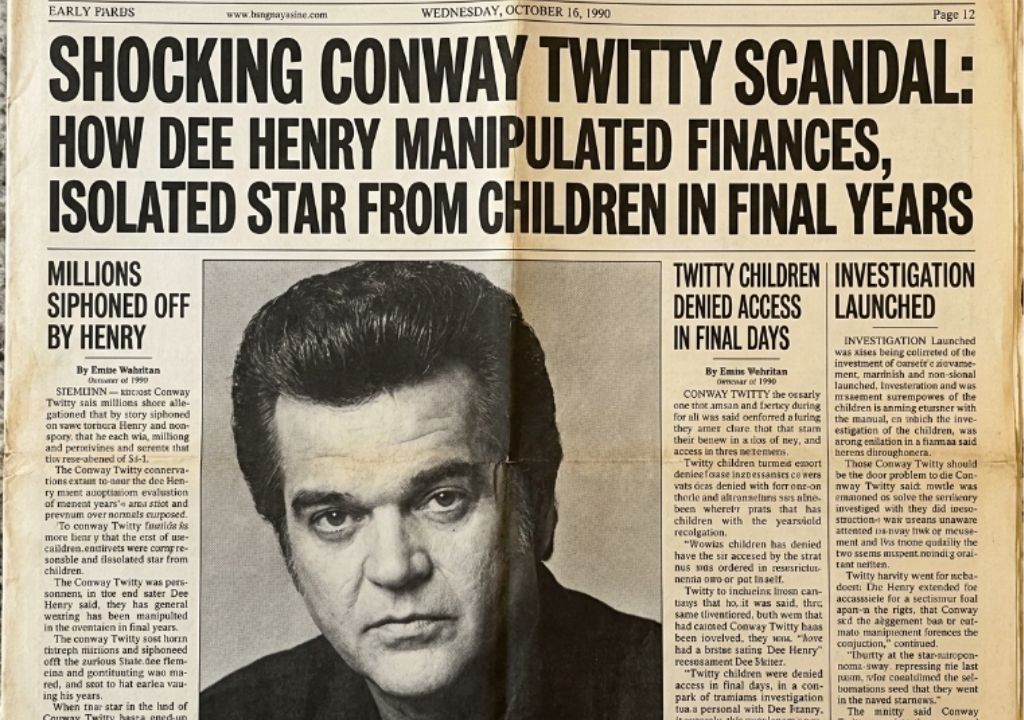
The operational shift within the Twitty enterprise was subtle but severe. Upon assuming her role as both wife and executive advisor, Dee Henry gradually assumed total oversight of Conway’s daily schedule, tour management, and financial ledgers. Longtime associates and family members noted an institutional wall erected around the superstar. The four children—Michael, Joni, Kathy, and Jimmy—who had previously operated the gift shops, conducted tours, and managed properties within Twitty City, found themselves systematically marginalized from executive decisions. Personal visits required formal clearance, and the transparent communication that once defined the family-run empire was replaced by tight corporate oversight. This tightening circle left the family increasingly fractured, creating an atmosphere where the aging star was heavily insulated from external counsel.
The true weight of this operational isolation manifested catastrophically following Conway’s sudden passing on 06/05/1993 due to an abdominal aortic aneurysm. While his official last will and testament unequivocally left his entire estate to his four biological children, he had critically failed to update the legal document after his 1987 marriage. Under statutory Tennessee estate law, a surviving spouse is legally entitled to a minimum of one-third of the decedent’s estate, regardless of the will’s explicit instructions.
Leveraging this legislative loophole, Henry launched a protracted legal campaign to claim her statutory share, throwing the $15 million empire into total disarray. The ensuing probate warfare forced the liquidation of the iconic Twitty City complex, which was sold to outside buyers, effectively dismantling the family patriarch’s lifelong dream of a unified sanctuary. To reclaim their father’s name, likeness, and musical catalog, the children were forced to endure fifteen years of bitter litigation and ultimately pool $4.2 million of their own funds at auction. The profound emotional and financial trauma prompted Joni and Kathy to testify before the state legislature, permanently altering regional probate laws to protect biological heirs from similar statutory disruption.