Introduction
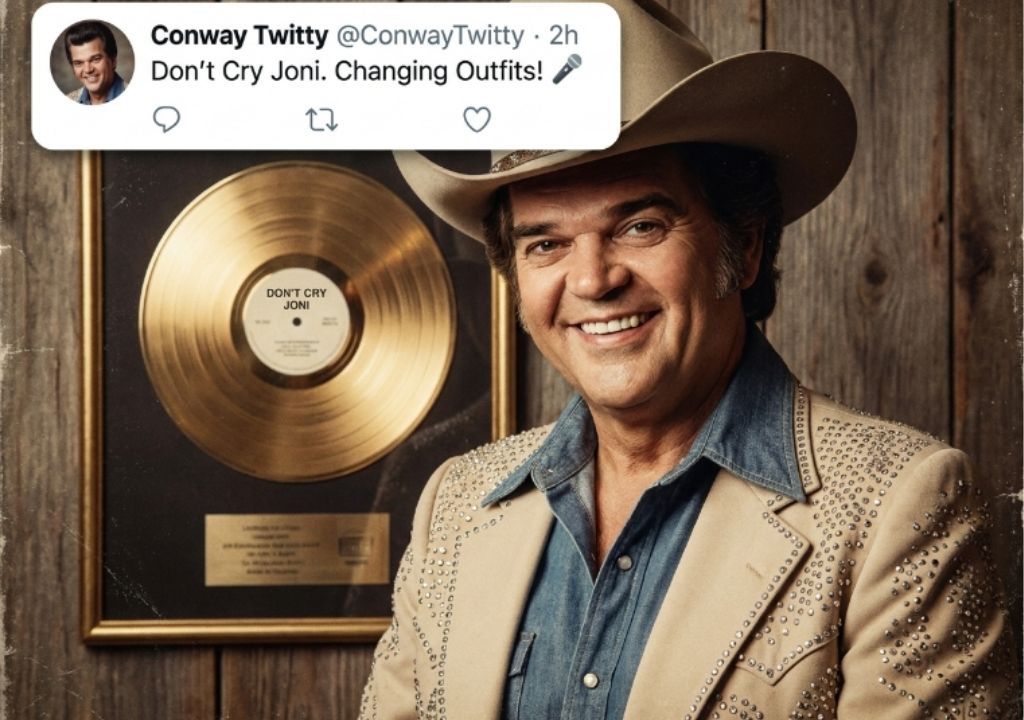
Music has a singular, almost supernatural ability to pinpoint the exact moment our lives shifted on their axes. It maps our histories not through dates on a calendar, but through the universal language of heartache, missed connections, and the devastating realization of bad timing. Among the countless melodies that populate the golden landscape of 1970s country music, few capture this profound emotional ache as vividly as Conway Twitty’s 1975 masterpiece, Don’t Cry Joni. Recorded as a deeply moving duet with his then-sixteen-year-old daughter, Joni Lee, this track transcends the boundaries of standard radio entertainment. It unfurls like a poignant, slow-burning cinematic tragedy compressed into a few minutes of vinyl bliss, capturing the bittersweet essence of youth, unrequited devotion, and the cruel irony of the passage of time.
To understand the immense gravity of this song, one must understand the incomparable artistry of Conway Twitty. Known as the high priest of country music, Twitty possessed a velvety, deeply resonant baritone that could convey a lifetime of sorrow in a single, sustained note. He did not merely sing lyrics; he inhabited them, treating every ballad like an intimate theatrical monologue. In Don’t Cry Joni, he introduces us to a classic, heart-wrenching narrative that feels instantly familiar to anyone who has ever loved and lost. The story begins through the innocent eyes of a fifteen-year-old neighborhood girl named Joni, who is hopelessly in love with Jimmy, a slightly older boy moving away to seek his fortune. Her desperate plea to him is immortalized in the song’s opening verses, backed by the gentle, weeping sighs of a traditional steel guitar and a delicate acoustic arrangement that evokes the quiet atmosphere of a fading summer evening in rural America.
Jimmy’s rejection of young Joni is not born out of malice, but out of the practical reality of their age difference—a gentle admonition to look to the future because she is “much too young” for him. However, the true brilliance and emotional cruelty of the songwriting lies in the second half of the track. Years roll by, a classic trope of heritage country storytelling, and Jimmy eventually returns to his hometown, his own heart now yearning for the girl he left behind. The narrative shifts beautifully and tragically as he discovers that the clock cannot be turned back; Joni has moved on, married another, and Jimmy is left standing in the cold shadows of his own delayed realization. The vocal chemistry between Conway and his daughter Joni Lee provides an unparalleled layer of authenticity. Joni Lee’s pure, innocent vocals perfectly mirror the fragile hope of adolescence, while Conway’s mature, rich baritone carries the crushing, heavy weight of adult regret.
Produced during an era when country music leaned heavily into organic, storytelling arrangements, Don’t Cry Joni stands as a magnificent monument to the power of the narrative ballad. It reminds us of a time when songs were built on solid foundations of acoustic guitars, subtle strings, and raw human vulnerability rather than digital perfection. It is a song specifically engineered for late-night reflection, demanding a quiet room where the listener can let the acoustic waves wash over them and perhaps wander down the forgotten corridors of their own past. It forces us to confront the ghosts of our own “what-ifs” and the timeless truth that sometimes, love’s greatest enemy is simply the hands of the clock.