Introduction
There is a distinct kind of melancholy that only the mid-1970s could produce—a texture of sound woven from lush strings, a lonely piano, and an unshielded vulnerability that seems almost brave by today’s standards. At the very epicenter of this musical era stands Barry Manilow’s 1974 masterpiece, “Mandy.” Originally recorded as “Brandy” by Scott English, it was Manilow who looked past the upbeat tempo of the original and unearthed the ghost living inside the lyrics. By changing the title to avoid confusion with another hit of the era and slowing the rhythm down to a breathless heartbeat, he didn’t just record a song; he created an anthem for the heartbroken and the regretful.
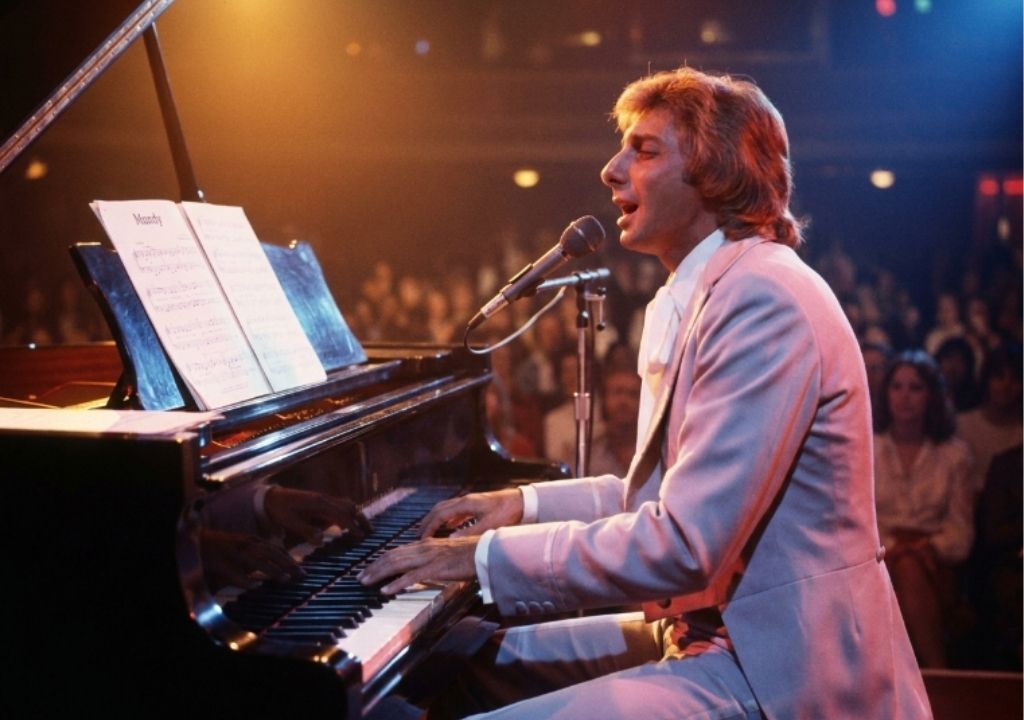
When the track opens, it immediately establishes an atmosphere of quiet, late-night isolation. That solitary piano progression feels like footsteps echoing down an empty street, setting a stage where memories are the only company left. Manilow’s voice enters not with the grand theatricality he would later be famous for, but with a fragile, conversational intimacy. He sounds like a man speaking to an empty room, realizing too late that the mundane world he took for granted was actually paradise when she was in it. This restraint is what makes the emotional payoff so devastating. As the first verse flows into the chorus, the arrangement subtly expands, introducing a swell of strings that mimics the rising tide of internal panic when one realizes a grand love has slipped through their fingers.
What defines the genius of Barry Manilow during this golden age of adult contemporary music is his unparalleled mastery of the dramatic crescendo. “Mandy” is the textbook definition of how to build emotional stakes through instrumentation. By the time the song reaches its iconic modulation and the brass sections join the fray, the quiet regret has transformed into a towering, desperate plea. You can feel the weight of every missed opportunity and unspoken word in his vocal delivery. He isn’t merely singing notes; he is exorcising a memory. For decades, this track has served as a sonic time capsule, transporting listeners back to an era when pop music wasn’t afraid to be unapologetically dramatic and deeply sentimental. It reminds us of a time when radio waves carried genuine, unfiltered human longing into living rooms and parked cars across the world, leaving an indelible mark on the souls of anyone who has ever loved and lost.