Introduction
There is a unique magic that belongs entirely to the late 1970s, a golden era where music was not just heard but deeply felt through a haze of neon lights, velvet seats, and spinning mirror balls. In 1978, the musical landscape was dominated by the relentless thumping of disco, yet one man managed to fuse that euphoric dance floor energy with a gripping, cinematic narrative that remains unmatched to this day. When Barry Manilow released this track, he did not just deliver a hit; he crafted a living, breathing three-act tragedy disguised as a tropical celebration. It remains a sparkling monument to a bygone era of pure showmanship and storytelling.
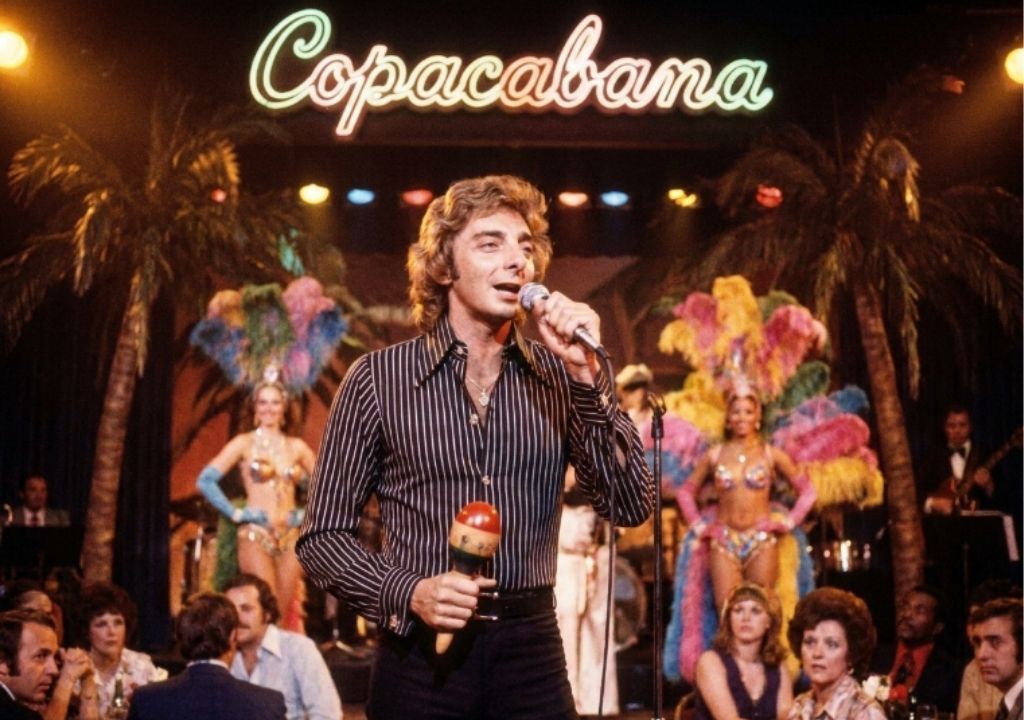
The true genius of the song lies in its remarkable contrast. On the surface, the listener is immediately swept up in a cascade of vibrant brass, infectious Latin percussion, and an ecstatic disco pulse that practically forces you to move. It feels like stepping into a crowded, smoke-filled Havana nightclub where the night is always young. Yet, if you peer beneath that dazzling sonic veneer, you uncover a narrative that is remarkably dark, melancholic, and deeply human. Manilow, alongside lyricists Bruce Sussman and Jack Feldman, spins the haunting yarn of Lola, a showgirl, and Tony, a bartender, whose passionate love story is violently cut short by the envious underworld boss, Rico.
What makes this track an absolute masterpiece of nostalgic pop is how vividly it paints its setting. You can almost see the yellow feathers in Lola’s hair, smell the ocean breeze outside the club, and feel the tension rise as the drinks pour and the music swells. The storytelling is so masterfully structured that by the time the final verse arrives—transporting us thirty years into the future to find a broken, faded Lola sitting in the ruins of her memories—the emotional weight is genuinely staggering. It is a profound meditation on loss, aging, and the ghosts of our youth, all wrapped up in a melody that makes the world want to dance.
Manilow’s performance is nothing short of theatrical perfection. Known for his sweeping ballads, he brought a grand, Broadway-esque sensibility to the disco genre, elevating it from mere club music into a timeless piece of musical theater. His vocals carry a knowing, narrator-like warmth, guiding us through the glitz and the eventual heartbreak with absolute grace. Decades later, the song still transports listeners straight back to the heart of 1978, evoking a powerful sense of longing for an era when popular music dared to be both incredibly fun and deeply narrative. It is a vivid reminder of the power of a great song to capture a moment in time and preserve it forever.