INTRODUCTION
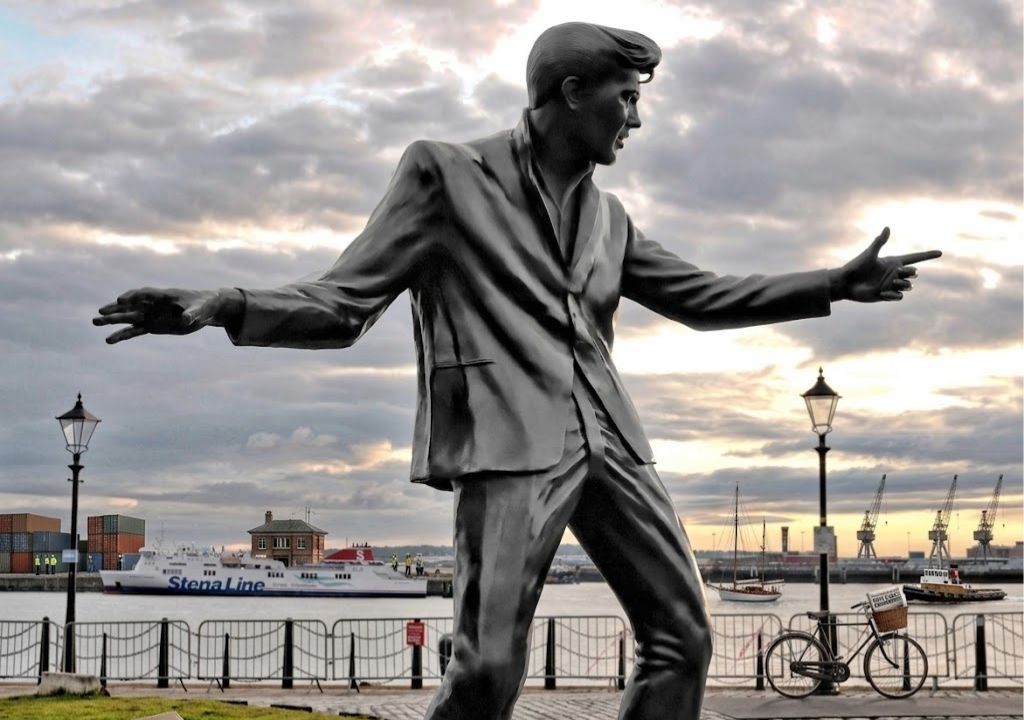
Before the screaming crowds, the gold records, and the flashing marquee lights of the late 1950s transformed Ronald Wycherley into the rock and roll sensation Billy Fury, there was only the chilly mist of the River Mersey. Long before he rivaled Elvis Presley on the British charts, the young Liverpudlian spent his mornings working as a humble deckhand aboard the rugged tugboat The Formby. Today, that profound maritime chapter of his youth is permanently frozen in time. Standing proudly outside the historic Piermaster’s House at the iconic Royal Albert Dock, a magnificent bronze monument honors the singer’s raw, authentic origins. Created by celebrated sculptor Tom Murphy, the statue captures Fury not merely as a polished pop star, but as a soulful son of Liverpool’s waterfront, forever gazing out toward the tides that first carried his dreams.
THE DETAILED STORY
The cultural archival network of Liverpool has long excelled at safeguarding its monumental musical history, but Tom Murphy’s spectacular sculpture of Billy Fury achieves something far rarer: it seamlessly bridges the gap between commercial celebrity and genuine working-class heritage. Unveiled to widespread critical acclaim, the bronze figure stands as an enduring testament to an era when British rock and roll was being dynamically forged within the industrial docks of northern port cities. Murphy’s artistic vision deliberately avoids the cliché of a frantic, microphone-clutching performer, choosing instead to focus intently on the quiet, smoldering charisma that defined Fury’s early stage appeal. The posture is effortlessly cool, capturing the iconic leather-clad stance while anchoring it directly to the geographic reality of the Piermaster’s House, where the intense Atlantic winds still sweep across the historic flagstones.
What makes this public installation incredibly potent is its precise alignment with the physical geography of Fury’s life. By permanently placing the statue at the Royal Albert Dock, the city directly honors the grueling, honest labor that shaped Ronald Wycherley long before his legendary audition with impresario Larry Parnes. The proximity to the Mersey serves as a constant reminder of the young man who hauled heavy ropes on The Formby before securing twenty-four top-forty UK hits, including timeless masterpieces like “Halfway to Paradise.” Scholars and music journalists frequently note that Fury’s unique vulnerability on stage derived entirely from this authentic, unpretentious upbringing. This magnificent public installation acts as a vital educational touchstone for thousands of international visitors annually, illustrating how Liverpool’s maritime industry directly nurtured its global artistic explosions. Ultimately, Murphy’s masterful work ensures that while modern pop trends continually evolve, Billy Fury’s monumental contribution remains beautifully cast in bronze—an immovable, elegant sentinel representing the definitive triumph of Liverpool’s creative spirit over the passage of time. It stands as an unyielding beacon for generations of music lovers.