INTRODUCTION
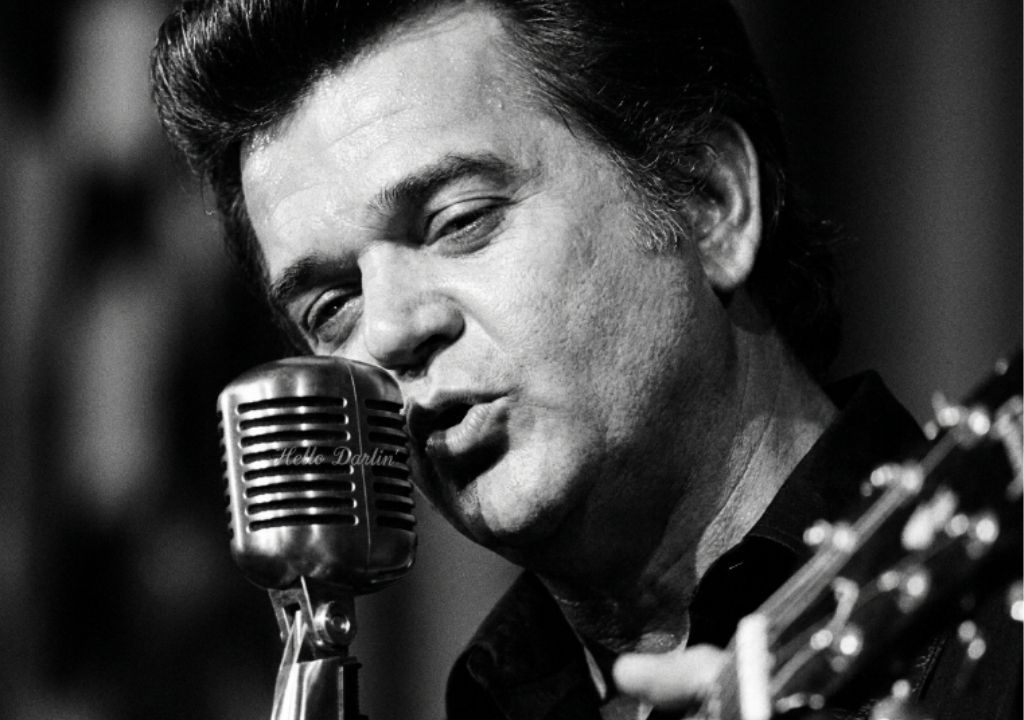
Inside the legendary Bradley’s Barn studio in Mount Juliet, Tennessee, late in 1969, the air hung heavy with the scent of reel-to-reel tape and analog ambition. A former rockabilly rebel turned country purist stood before the microphone, struggling to anchor the opening of a song that would soon define his entire legacy. The music tracked beautifully, yet the initial vocal takes lacked the visceral, spine-tingling magnetism required to elevate the narrative. Instead of forcing a conventional country croon through the opening chords, the artist stepped closer to the silver grille, exhaled completely, and delivered a spoken phrase so heavy with calculated vulnerability it sent shockwaves through the control room. Those two simple words, delivered in a smoky, resonant undertone, instantly shattered the conventional wall between performer and listener, establishing a permanent masterclass in the profound architecture of sonic intimacy.
THE DETAILED STORY
The secret behind Conway Twitty’s legendary masterstroke on “Hello Darlin'” lies in a deliberate rejection of standard mid-century recording norms. By 1970, the country music landscape demanded robust, polished tenor vocals or deep, weeping steel-guitar introductions. When Twitty entered the studio, the composition demanded an opening hook that could immediately capture the listener’s undivided attention. The initial blueprint called for a traditional sung introduction, but Twitty recognized that a standard melodic delivery would dilute the raw, conversational heartbreak of the lyrics. He chose instead to exploit the proximity effect of the studio microphone, dropping his voice into a gravelly, ultra-low register that felt less like a commercial broadcast and more like a private confession whispered in the dark.
When the track officially debuted on Billboard charts on 03/28/1970, the industry witnessed a cultural phenomenon. By the time it secured the number-one position on 06/06/1970, the spoken intro had become an institution, driving millions of female fans into a frenzy during live performances. Twitty’s calculated choice weaponized the illusion of direct, one-on-one communication. To the listener, he was not a distant star singing on a stage; he was a close confidant speaking directly to their personal experiences of longing and reconciliation.
This architectural brilliance paid massive dividends, cementing the single as the top country song of the entire year and generating millions of dollars in sustained catalog revenue. It proved definitively that quiet understatement could outperform the loudest musical orchestration. For the rest of his career, whenever the stadium lights dimmed at a concert venue, that signature phrase would elicit ecstatic roars before a single musical note was even played by his backing band. Twitty profoundly understood that in an era dominated by increasingly overproduced studio arrangements, the most powerful instrument in an artist’s arsenal is sometimes the unvarnished human voice operating at its most intimate, raw, and magnetic frequency. This artistic decision ultimately rewrote the playbook for country music showmanship.