INTRODUCTION
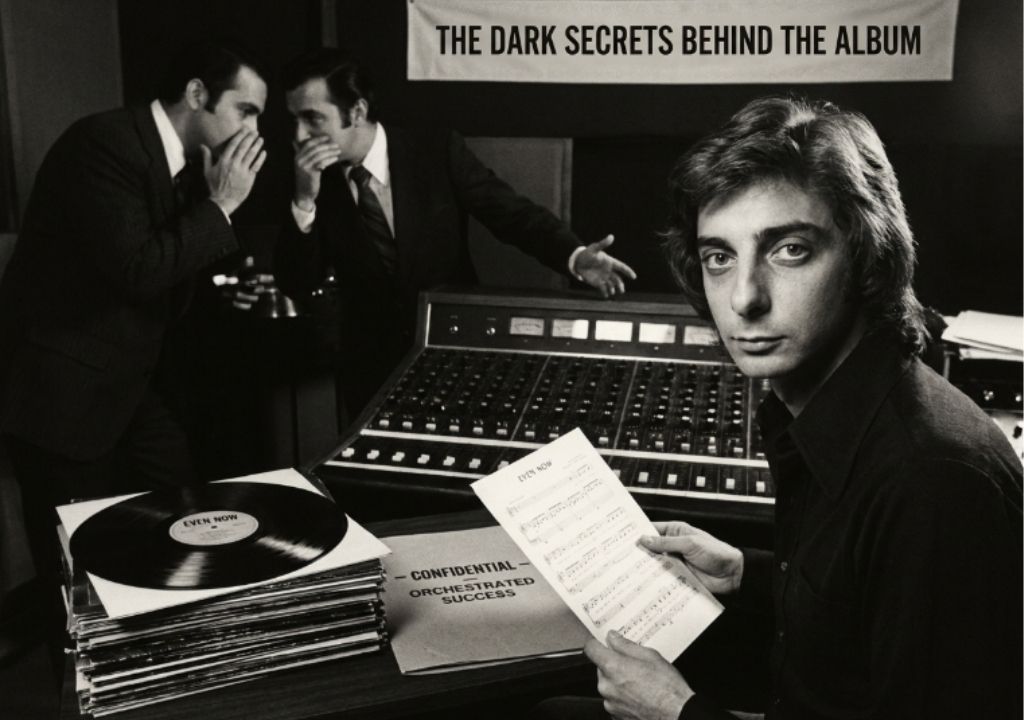
In February 1978, the temperature outside A&M Studios in Hollywood, California, lingered at a cool 55 degrees Fahrenheit, but inside, the atmosphere crackled with corporate pressure. Arista Records chief Clive Davis had staked a multi-million-dollar empire on a specific sonic formula, and Barry Manilow was his reluctant instrument. While Manilow envisioned himself as a self-contained singer-songwriter in the traditional mold of Elton John, Davis saw something entirely different: an immaculate vessel for chart-topping pop masterpieces engineered for mass appeal. The resulting triple-platinum album, Even Now, would become a definitive monument to calculated hit-making. Yet, beneath the lush, shimmering orchestrations lay a hidden narrative of intense artistic compromise and clinical manipulation. This was not accidental genius; it was a carefully constructed commercial architecture designed to conquer the Billboard 200 through high-stakes industry strategy and relentless studio perfectionism.
THE DETAILED STORY
The architecture of Even Now relied on a strict division of labor that challenged Manilow’s creative identity. The industry secret behind his multi-million-dollar success was an unspoken rule enforced by Arista Records: Manilow could arrange and co-produce alongside Ron Dante, but the lead singles were often hand-picked or heavily managed from external sources to guarantee commercial saturation. For an artist who craved the singer-songwriter prestige of his contemporaries, accepting tracks written by others felt like a quiet surrender. The album’s breakthrough hit, “Can’t Smile Without You”—originally recorded by the Carpenters—was brought in by Davis specifically to capture the daytime radio demographic. Karen Carpenter herself had previewed the track at A&M Studios, famously telling Manilow she wished the number-one record belonged to her. Meanwhile, the title track “Even Now,” written by lyricist Marty Panzer and composed by Manilow, was strategically positioned to anchor the emotional core of the record, deploying a structural modulation from B major to a booming C major chorus designed mathematically to induce goosebumps and drive single sales.
But the truest subversion of Manilow’s traditional pop identity arrived with “Copacabana (At the Copa).” Initially dismissed by purists as a radical detour, the track was an orchestrated plunge into the late-1970s disco craze. Recorded between July and November 1977, the track became addictive when percussionist Alan Estes added its signature, unyielding cowbell. Driven by Artie Butler’s complex orchestration, the song was engineered to dominate both dance floors and prime-time television. The financial investment was staggering, with Arista deploying thousands of USD to secure maximum promotion across global territories. When the album peaked at number three on the Billboard 200 on April 08, 1978, the strategy proved infallible. The structural secret of Even Now was not a sinister plot, but the reality of a modern pop factory where art was weaponized as commerce. Behind the gold records lay a calculated masterclass in demographic targeting, proving that emotional intimacy could be successfully manufactured on a global scale.