Introduction
There is a particular kind of magic that belongs exclusively to the early autumn of 1992, a time when country music was undergoing a massive, sweeping renaissance, yet its soul remained deeply rooted in traditional storytelling. In the center of this cultural moment stood a film called Pure Country and, more importantly, its crowning musical achievement. When the needle drops or the radio plays the opening strains of “I Cross My Heart,” it does not just play music; it projects a rich, amber-tinted film in the theater of the mind. You can almost feel the cool breeze of a Texas night, see the soft glow of stage lights reflecting off a polished silver belt buckle, and hear the breathless silence of an audience completely captivated by a singular, honest voice.
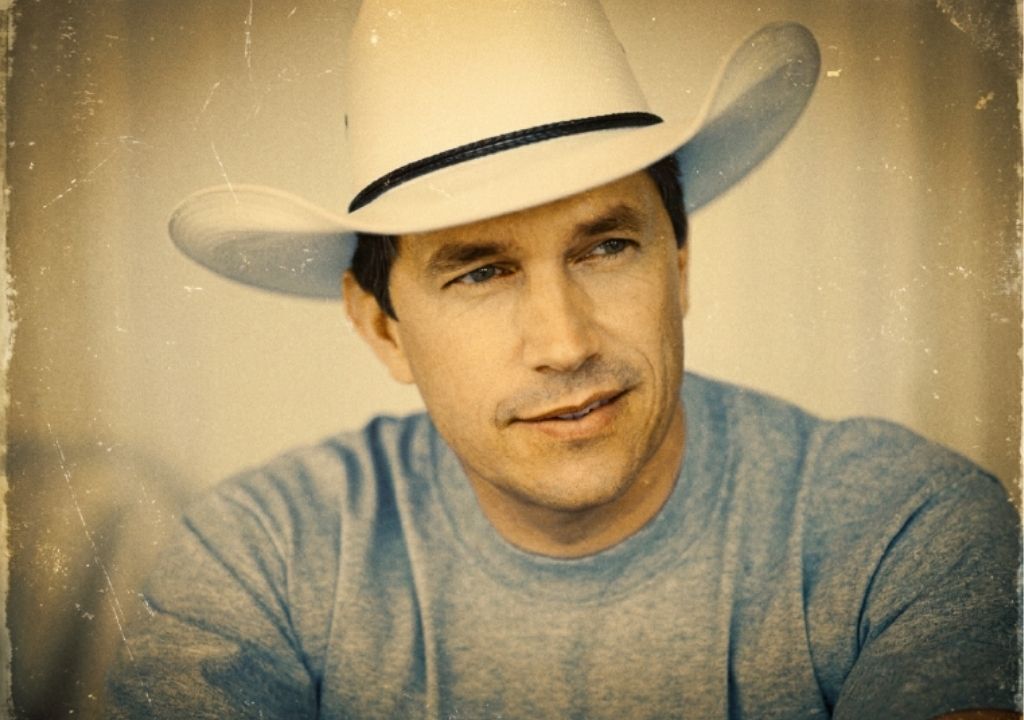
George Strait, affectionately and rightfully crowned the “King of Country Music,” has always possessed an unparalleled ability to deliver profound emotional weight without ever resorting to theatrical oversinging. His style is defined by a masterclass in subtlety—a gentle tilt of his cowboy hat, a warm smile, and a vocal tone as smooth and dependable as worn leather. In “I Cross My Heart,” this signature style reaches its artistic zenith. Written by Steve Dorff and Eric Kaz, the song avoids the cliché traps of overproduced 90s power ballads. Instead, it relies on a beautiful, clean arrangement where acoustic guitars, lush strings, and a weeping steel guitar wrap around Strait’s voice like a comforting embrace. It is a brilliant example of the neotraditional country movement, proving that true romanticism does not need to shout to be profoundly heard.
The narrative arc of the song behaves like a sacred vow whispered between two people in a crowded room where everyone else suddenly fades away. From the very first line, the listener is drawn into a world of unconditional commitment and timeless devotion. It addresses the fears of vulnerability and the absolute certainty of lifelong love, serving as a guiding light for anyone who has ever dared to give their heart completely to another. When Strait hits the soaring crescendo of the chorus, promising to give all the love he has to give for the rest of his life, it ceases to be just a track from a movie soundtrack; it transforms into an eternal anthem of loyalty that transcends the boundaries of the genre itself.
For those who lived through that golden era, this song is wrapped in layers of deep personal nostalgia. It is the melody that echoed across gym floors at high school proms, the first dance at countless weddings, and the soundtrack to quiet late-night drives down deserted country roads. It captures a simpler time when music was built on the foundation of genuine instruments and poetic sincerity. Decades later, “I Cross My Heart” has lost none of its original luster. It stands as a flawless monument to the enduring power of traditional love stories, reminding us that no matter how rapidly the world changes, the human heart will always crave the comforting assurance of a promise truly kept.